
by Emmitt Barry, Worthy News Correspondent
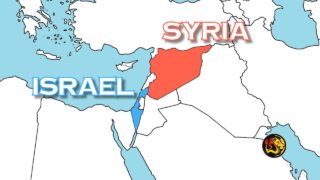
(Worthy News) – Israel struck a chemical weapons factory belonging to the former regime of Syrian President Bashar al-Assad to prevent it from falling into rebel hands. The attack occurred just days after the United Nations Security Council was warned about potentially large quantities of unaccounted-for chemical warfare agents in Syria.
Days before Bashar al-Assad’s regime collapsed, the U.N.’s disarmament chief warned the Security Council that international monitors cannot confirm that Syria fully destroyed its chemical weapons.
Izumi Nakamitsu, reporting on December 5, said Syria’s latest declaration to the Organization for the Prohibition of Chemical Weapons (OPCW) remains “inaccurate and incomplete,” leaving potentially large quantities of chemical warfare agents unaccounted for.
The OPCW, which has overseen Syria’s obligations under the Chemical Weapons Convention since 2013, recently opened inquiries into undisclosed chemical weapons development at two sites previously declared non-operational.
As Assad’s rule waned, analysts noted that the regime had concentrated weapons research in several branches of the government’s Scientific Studies and Research Center.
However, Israeli officials and experts confirmed that Israel recently struck facilities tied to these weapons, aiming to prevent them from falling into rebel hands.
Copyright 1999-2026 Worthy News. This article was originally published on Worthy News and was reproduced with permission.
Latest News from Worthy News
President Donald Trump threatened Friday to impose a 100% tariff on any country that implements a digital services tax on U.S. technology companies, a move that could add to what analysts estimate is already a $700-per-household burden from existing tariffs.
President Donald Trump told Christian conservatives Friday that America’s future depends on preserving faith, freedom, and the nation’s founding convictions, declaring that the United States will always remain “one nation under God.”
U.S. forces struck Iranian missile and drone storage facilities overnight after President Donald J. Trump condemned what he called a “foolish” Iranian attack on a commercial cargo ship transiting the Strait of Hormuz.
As the death toll from Venezuela’s devastating twin earthquakes approached 1,000 on Friday, stories of courage emerged from the rubble, including that of a young mother who sacrificed her own life to save her toddler daughter.

A court in Pakistan has acquitted a second Christian of blasphemy, just days after another believer was also cleared of similar charges.

Asbury Theological Seminary says it has been removed from The United Methodist Church’s list of approved schools for ordination candidates, ending an 80-year relationship after the evangelical institution declined to align with the denomination’s unbiblical positions on marriage and human sexuality.
Florida has permanently closed its temporary illegal immigrant holding center known as “Alligator Alcatraz” after all federal detainees were transferred to other facilities, Gov. Ron DeSantis announced June 25.