
By Stefan J. Bos, Chief International Correspondent Worthy News
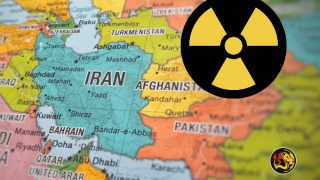
TEHRAN (Worthy News) – Tehran has warned that it will weaponize the Iranian nuclear program if Israel threatens Iran’s existence.
“We have no decision to build a nuclear bomb, but should Iran’s existence be threatened, there will be no choice but to change our military doctrine,” Kamal Kharrazi, a senior adviser to Supreme Leader Ayatollah Ali Khamenei, said in remarks seen by Worthy News on Sunday.
Israel and Western leaders have long suspected that the Islamic Republic wants nuclear technology to build a bomb, although Iran maintained its nuclear program is “peaceful.”
Israel’s Prime Minister Benjamin Netanyahu said his government won’t allow Iran to become a nuclear power. “We have to hold back Iran from achieving nuclear weapons,” Netanyahu stressed in the “Dr. Phil Primetime” show aired over the weekend.
In April, in the middle of a tense standoff with Israel, which is widely believed to have nuclear weapons, a senior Iranian Revolutionary Guards commander also said Israeli “threats” could prompt Iran to change its nuclear doctrine.
In 2022, the same adviser said Iran was technically capable of making a nuclear bomb but had not yet decided whether to build one.
The Supreme Leader of Iran, Ali Khamenei, banned the development of nuclear weapons in a fatwa, or religious edict, in the early 2000s.
STOCKPILING NUCLEAR BOMBS
He reiterated that in 2019, saying that building and stockpiling nuclear bombs was “wrong and using it is haram” or religiously forbidden.
But Iran’s then-intelligence minister reportedly said in 2021 that Western pressure could push Tehran towards nuclear weapons.
In his latest comments, Kharrazi said: “In the case of an attack on our nuclear facilities by the Zionist regime, our deterrence will change,” using Iran’s official term for Israel.
Kharrazi, who also leads Iran’s Strategic Council on Foreign Relations, told television network Al-Jazeera, which is banned in Israel, that Iran “has the capacity to produce a bomb.”
Iran and Israel have long been arch-enemies, as Tehran seeks the destruction of the Jewish nation.
A decades-long shadow war erupted into open confrontation in April when Tehran launched about 300 missiles and drones against Israel in retaliation for a suspected Israeli strike on its embassy compound in Damascus.
Israel later announced that its military, backed by allies, shot down 99 percent of those weapons in a move described as “a miracle” by Christians praying for the nation.
The latest warnings by Iran were due to raise concerns about a new confrontation between Israel, which is widely believed to have nuclear weapons, and Iran.
Copyright 1999-2026 Worthy News. This article was originally published on Worthy News and was reproduced with permission.
Latest News from Worthy News

Israel and Iran-backed Hezbollah have agreed to a ceasefire that was to begin Friday afternoon, Worthy News learned.

At least 10 people, including four children, were injured in a Russian strike on Ukraine’s northeastern Kharkiv region, Ukrainian authorities said Friday. In southern Ukraine, the State Emergency Service reported that one person was killed and four others were injured in a separate Russian attack on the Odesa region.

President Donald Trump signed the temporary peace deal with Iran ahead of schedule Wednesday at the Palace of Versailles in France, kicking off negotiations over a final nuclear deal.
Iran’s Supreme Leader Mojtaba Khamenei’s statement following the signing of a memorandum of understanding with the United States is being viewed by analysts not as an embrace of peace, but as a carefully crafted declaration that preserves Tehran’s revolutionary posture while allowing the regime to regroup.

The United States imposed new sanctions Thursday on individuals and entities linked to Hezbollah, accusing them of using political and financial influence to obstruct Lebanon’s peace process and delay the Iran-backed group’s disarmament.

Ukraine launched one of its largest drone attacks on Moscow since the war began, hitting a key oil refinery and other targets around the Russian capital, leaving at least one person dead and numerous others injured, Russian officials said.

Russian President Vladimir Putin hosted Southeast Asian leaders in Kazan this week as Moscow moved to deepen ties with the Association of Southeast Asian Nations and promote its vision of a “multipolar world order” aimed at countering U.S. global dominance.