
By Stefan J. Bos, Chief International Correspondent Worthy News
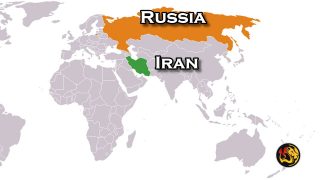
TEHRAN/MOSCOW/BUDAPEST (Worthy News) – Iran is reportedly providing Russia with a massive number of highly accurate ballistic missiles, deepening the military cooperation between the two U.S.-sanctioned countries and raising concerns in wartorn Ukraine and Israel.
Already, some 400 “highly accurate” missiles were delivered, including many from the Fateh-110 family of short-range ballistic weapons, Iranian sources said.
Among them, the Zolfaghar, capable of hitting targets 186 miles (nearly 300 kilometers) to 435 miles (700 kilometers) away, Worthy News monitored.
The shipments began in early January after the deal was finalized in meetings late last year in Tehran and Moscow, Iranian sources told Reuters news agency.
An anonymous Iranian military official was quoted as saying there have been at least four shipments of missiles and that there would be more in the coming weeks.
Another senior official explained that some were transported via plane, while others traveled via the Caspian Sea on ships.
“There will be more shipments,” the second Iranian official added. “There is no reason to hide it. We are allowed to export weapons to any country that we wish to.”
UN RESTRICTIONS
Restrictions dictated by the United Nations Security Council on Iran’s export of missiles, drones, and other military technology expired in October.
Yet, the United States and the European Union have retained sanctions on Tehran’s ballistic missile program amid concerns about Iran’s intentions in the Middle East and beyond
A U.S. official said Washington knew of talks between Iran and Russia on missiles but wasn’t aware of any such deliveries yet.
The statement raised questions about whether the shipments of missiles by the Islamic Republic had remained undetected by the U.S. despite its extensive intelligence-gathering capabilities.
White House national security spokesman John Kirby warned last month that Russia “was close” to acquiring short-range ballistic weapons from Iran, as well as missiles already sourced from North Korea.
News of the deliveries came as Russia’s invasion of Ukraine is on the verge of entering its third year, leaving Ukraine struggling to catch up with Moscow’s advances on the battlefield.
Iran-made Shahed ‘kamikaze’ drones have already pounded Kyiv and other Ukrainian cities and infrastructure alongside an array of missiles.
UKRAINE STRUGGLES
Tehran’s surface-to-surface rockets sent to Russia were due to further complicate Ukraine’s defense efforts and attempts to retake lost territories.
The U.S. failure to vote through a fresh military aid package for Ukraine is already impacting the frontlines, warned the secretary-general of the NATO military alliance last week.
Jens Stoltenberg said he believed the U.S. Congress would eventually approve the stalled $60 billion package after the Senate passed the measure.
His words could not prevent the fall of the Ukrainian frontline town of Avdiivka. And with Western support stalled or slowly arriving, Jeffrey Lewis, an expert with the Middlebury Institute of International Studies at Monterey, said the Fateh-110 family of missiles and the Zolfaghar were precision weapons that could do more harm.
“They are used to point at things that are high value and need precise damage,” said Lewis in published remarks, adding that 400 munitions already in Russia could inflict considerable harm. He noted that Russian bombardments in Ukraine were already “pretty brutal.”
Hundreds of thousands of people, including many troops, are believed to have been killed and injured in Europe’s bloodiest conflict since World War Two.
Iran’s capabilities to export to Russia were also likely to raise concerns in Israel that Tehran could send more missiles to Iran-backed militia in the Middle East.
Russia also has a significant military presence in Syria, though Israel has been careful not to seek a direct confrontation with Moscow’s military.
Copyright 1999-2026 Worthy News. This article was originally published on Worthy News and was reproduced with permission.
Latest News from Worthy News

Israel and Iran-backed Hezbollah have agreed to a ceasefire that was to begin Friday afternoon, Worthy News learned.

At least 10 people, including four children, were injured in a Russian strike on Ukraine’s northeastern Kharkiv region, Ukrainian authorities said Friday. In southern Ukraine, the State Emergency Service reported that one person was killed and four others were injured in a separate Russian attack on the Odesa region.

President Donald Trump signed the temporary peace deal with Iran ahead of schedule Wednesday at the Palace of Versailles in France, kicking off negotiations over a final nuclear deal.

Iran’s Supreme Leader Mojtaba Khamenei’s statement following the signing of a memorandum of understanding with the United States is being viewed by analysts not as an embrace of peace, but as a carefully crafted declaration that preserves Tehran’s revolutionary posture while allowing the regime to regroup.

The United States imposed new sanctions Thursday on individuals and entities linked to Hezbollah, accusing them of using political and financial influence to obstruct Lebanon’s peace process and delay the Iran-backed group’s disarmament.

Ukraine launched one of its largest drone attacks on Moscow since the war began, hitting a key oil refinery and other targets around the Russian capital, leaving at least one person dead and numerous others injured, Russian officials said.

Russian President Vladimir Putin hosted Southeast Asian leaders in Kazan this week as Moscow moved to deepen ties with the Association of Southeast Asian Nations and promote its vision of a “multipolar world order” aimed at countering U.S. global dominance.