
by Emmitt Barry, with reporting from Washington D.C. Bureau Staff
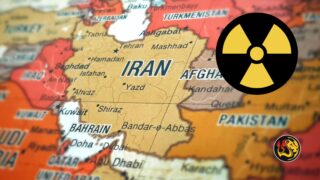
DUBAI, United Arab Emirates (Worthy News) – Iran has begun rebuilding missile-production sites destroyed by Israel during the 12-day war in June, according to satellite images analyzed by the Associated Press. However, experts say a crucial component — large planetary mixers needed to manufacture solid-fuel missiles — remains absent.
The reconstruction underscores Tehran’s determination to restore its missile program, one of its few remaining military deterrents after Israeli strikes severely weakened Iran’s air defense systems. Solid-fuel missiles, which can be launched more quickly than liquid-fuel rockets, were among Israel’s main targets during the conflict.
Satellite photos from Planet Labs PBC taken this month show new construction at Iran’s Parchin and Shahroud facilities, including repairs to buildings that previously housed the mixers. “If they’re able to reacquire some key things like planetary mixers, then that infrastructure is still there and ready to get rolling again,” said Sam Lair of the James Martin Center for Nonproliferation Studies told the Associated Press.
Experts believe Iran could again turn to China to obtain the specialized mixers and fuel ingredients. Beijing has previously supplied the Islamic Republic with missile-related materials, though China’s Foreign Ministry insists it seeks “peace and stability in the Middle East” while supporting Iran’s sovereignty.
During the June war, Iran fired more than 570 ballistic missiles at Israel, according to the Jewish Institute for National Security of America. Combined with earlier exchanges, over a third of Tehran’s estimated 2,500-missile arsenal was launched. Before the strikes, Iran had been producing more than 200 solid-fuel missiles a month, making its capacity a central concern for Israeli military planners.
Israeli strikes appeared focused on eliminating Iran’s bottleneck — the mixers that ensure solid fuel is properly combined. Without them, Tehran’s ability to produce high volumes of missiles remains limited. Still, analysts warn that if Iran regains access, its program could quickly rebound.
“The 12-day war with Israel has altered some of our priorities,” Iranian Defense Minister Gen. Aziz Nasirzadeh said last month, boasting of new missiles with advanced warheads. “We are now focused on producing military equipment with higher precision and greater operational capabilities.”
Iran’s efforts come just as the United Nations considers reimposing “snapback” sanctions later this month, which would target its missile and nuclear activities. President Masoud Pezeshkian is scheduled to address the UN General Assembly on Wednesday, though Tehran’s mission has not commented on the missile reconstruction.
Western officials caution that Iran’s ties to China could help it bypass sanctions. Analysts warn that if Iran returns to prewar production levels, Israel may struggle to prevent a new wave of missiles from threatening its security.
“They are clearly very invested in their missile program, and I don’t think that they’re going to negotiate it away, ever,” Lair said.
Copyright 1999-2026 Worthy News. This article was originally published on Worthy News and was reproduced with permission.
Latest News from Worthy News

A federal appeals court on Tuesday temporarily allowed the Trump administration to continue collecting its 10% global tariff, pausing a lower-court ruling that found the import duties unlawful for three plaintiffs who had won relief last week. The U.S. Court of Appeals for the Federal Circuit issued a short-term administrative stay while it considers whether to keep the tariffs in place during the government’s appeal.
Saudi Arabia launched covert airstrikes inside Iran during the recent Middle East war, according to a Reuters exclusive citing two Western officials and two Iranian officials — a move that, if confirmed, would mark the first known Saudi military action carried out directly on Iranian soil. The reported strikes came in late March after the kingdom suffered Iranian attacks, including missile and drone strikes that exposed vulnerabilities in the U.S.-backed security umbrella protecting Gulf Arab states.

Russian President Vladimir Putin announced Tuesday that Russia had successfully test-fired its new Sarmat intercontinental ballistic missile — nicknamed “Satan II” by NATO — declaring it the most powerful missile in the world and saying it would enter combat service by the end of 2026.

Hungary’s new government signaled Monday it will continue buying Russian energy despite European Union plans to phase out imports of Russian oil and natural gas, raising the prospect of an early confrontation with Brussels.

More than 100 new evangelical churches have reportedly opened and thousands of people have been baptized in Ukraine since Russia launched its full-scale invasion of the country in February 2022, church leaders say.

Hezbollah Secretary-General Naim Qassem said an agreement between Iran and the United States may be the best path to ending Israeli military operations in Lebanon, while defiantly rejecting any outside demand that the Iranian-backed terrorist group disarm.

U.S. federal prosecutors announced criminal charges Tuesday against the operator of the cargo ship that struck and destroyed Baltimore’s Francis Scott Key Bridge in 2024, killing six construction workers.