
By Stefan J. Bos, Chief International Correspondent Worthy News
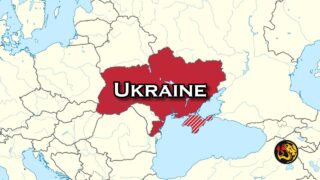
BERLIN/BUDAPEST (Worthy News) – Hungary has condemned Ukraine for banning the Ukrainian Orthodox Church over its alleged complicity in Russia’s full-scale invasion of the country.
Ukraine adopted legislation to ban religious groups linked to Moscow in a move that Hungary said targeted the Ukrainian Orthodox Church (UOC).
Most Ukrainians are Orthodox Christians, but their faith is split between the UOC, traditionally allied with the Russian Orthodox Church in Moscow, and the independent Orthodox Church of Ukraine, recognized in 2019.
Yet banning the UOC “is harmful and dangerous” and could set a precedent, argued Tristan Azbej, Hungary’s state secretary, for aiding persecuted Christians.
His comments, obtained by Worthy News on Friday, were made this week at an international meeting of the International Religious Freedom or Belief Alliance (IRFBA) in Berlin, Germany.
Azbej stressed, “Russia’s aggression was no justification for banning a church functioning on its territory or confiscating its property for political reasons, even if Ukraine cited security concerns.”
He recalled that Ukrainian President Volodymyr Zelenskyy signed the relevant law outlawing the Moscow-recognized UOC in late August.
EXPRESSING CONCERNS
After Zelenskyy inked the law, several Eastern church leaders asked the Hungarian government “to pass on their concerns about the ban and Estonia’s interference in the affairs of the Orthodox Church in the country,” he said.
Estonia, which declared independence from the Moscow-ruled Soviet Union in 1991, was among the most vocal supporters of Ukraine’s policies towards Russia. It was also one of the first nations to provide Ukraine with military aid, even before Russia’s full-scale invasion began on February 24, 2022.
Azbej noted that he also expressed concern about the European Union’s plan to place the head of the Russian Orthodox Church, Patriarch Kirill, on a list of sanctions in connection with the war in Ukraine.
He said several church leaders had turned to Hungary as a “voice of reason” regarding the matter. “Such bans could encourage power holders to restrict religious freedom in other countries for political or ideological reasons,” he added.
However, Zelenskyy defended his decision, saying it “will strengthen our Ukrainian spiritual independence.”
He said, “We must deprive Moscow of the last opportunities to restrict the freedom of Ukrainians. And the decisions for this must be 100 percent effective. We will ensure that.”
Azbej denied that Hungary has not been critical of Russia. He stressed that Hungary, which the EU has criticized for maintaining close ties with Moscow, has “condemned Russia’s attack on Ukraine.”
HUMANITARIAN AID
Azbej said Hungary “stood in solidarity with the suffering Ukrainian people and had launched the country’s largest-ever humanitarian aid operation.” Critics, including several European leaders, counter that Hungary has also halted EU aid over policy differences with Brussels.
Yet, the state secretary and other Hungarian government leaders suggested that Ukrainian President Zelenskyy should allow more cultural and religious rights in his nation. Hungary is particularly concerned about the plight of some 150,000 ethnic Hungarians living in neighboring Ukraine, including many Christians, with reports that several have been killed or injured while fighting in the army against Russian forces.
The Hungarian delegation attending the Berlin gathering also focused on the global persecution of Christians, “which has not gathered enough attention in international diplomatic forums,” Azbej said.
“Employing double standards, there’s a pretense that the lives of persecuted Christians are not as deserving of protection as other oppressed groups,” he added, citing the examples of “Islamist terrorists who murdered more than 4,000 Christians last year” in Africa and “atrocities committed by the Islamic State” group in Iraq and Syria.
He said, “The persecution of Christians and the Yazidi religious minority was tantamount to genocide” and claimed that these groups “had not received sufficient support to this day.”
Ahead of the conference, international church representatives attended a related event at the Hungarian embassy in Berlin, where they reportedly praised Hungary’s program for persecuted Christians.
Around 365 million Christians are subject to “high levels of persecution and discrimination,” according to advocacy group Open Doors. That figure compared to 340 million in 2021.
One in 7 Christians are persecuted worldwide, including 1 in 5 in Africa and 1 in 7 in Asia, according to investigators and reports cited by Hungary’s government and other leaders.
Copyright 1999-2026 Worthy News. This article was originally published on Worthy News and was reproduced with permission.
Latest News from Worthy News

Syria has begun destroying chemical weapons materials left behind by the Assad regime, marking the first known destruction process of its kind in the country in roughly a decade, officials told the U.N. Security Council on Thursday.

U.S. lawmakers are raising fresh concerns that China, Russia and other American adversaries could use electromagnetic pulse weapons to cripple the nation’s electrical grid and critical infrastructure, potentially plunging large portions of the country into darkness.

The Pentagon is turning to the Cold War-era Defense Production Act to accelerate missile manufacturing and rebuild U.S. weapons stockpiles strained by months of combat operations and years of military assistance to American allies, according to a Washington Times exclusive.

Tens of thousands of Spaniards poured into streets and public squares across the country Wednesday, protesting the government’s handling of the migrant crisis in Ceuta and demanding stronger protection of Spain’s borders.
Members of a Christian family of nine say they fear for their lives after being freed through court intervention from a brick kiln in eastern Pakistan following 11 years of alleged forced labor, beatings, threats and severely reduced wages.
Slovakia’s government of Prime Minister Robert Fico has approved joining an international commission assessing compensation claims stemming from Russia’s invasion of Ukraine, despite Moscow reportedly warning that such a move would be considered a “hostile act.”
More than a dozen members of Serbia’s influential student movement and opposition figures were targeted with sophisticated spyware ahead of parliamentary elections, according to investigators, fueling concerns about government surveillance in what researchers call the country’s largest documented wave of such spying.