
by Stefan J. Bos, Worthy News Europe Bureau Chief
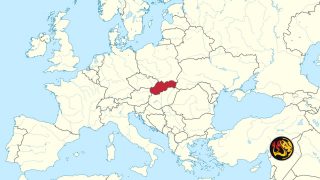
BRATISLAVA/BUDAPEST (Worthy News) – Authorities in Slovakia suggest that human error might be to blame for Monday’s massive train crash in eastern Slovakia that injured up to 100 people.
Slovak Railways said two fast trains collided at a point where two tracks merge into a single line. The crash occurred near the town of Rožňava shortly after 10 a.m. local time, authorities confirmed.
Police footage showed twisted metal and mangled carriages strewn across a hillside outside the village of Jablonov nad Turnou.
Slovakia’s rescue service scrambled two helicopters and several ambulances to the scene, while hospitals in the area activated trauma plans to handle the influx of casualties.
Interior Minister Matúš Šutaj Eštok confirmed that several “of the injured were in critical condition while the other injuries were not serious.”
Some people were reportedly trapped in the wreckage before help arrived.
HUMAN ERROR BLAMED
The minister added that “human error by one of the train drivers is the likely cause,” but an investigation was still underway.
Slovakia does have safety systems and oversight for its railways, and accidents are relatively rare in the eastern European Union nation.
However, there have been several serious incidents over the years.
Last year, an express train traveling from Prague to Budapest collided with a bus at a level crossing in southern Slovakia, killing seven people and injuring at least two others.
The most serious recorded train crash over the last 16 years was in 2009, when a train collided with a tourist coach on a level crossing in central Slovakia, killing 12 people and injuring at least 20 others.
All of the deaths and injuries occurred on the bus, which was pushed for tens of metres by the derailed train, officials said.
Copyright 1999-2026 Worthy News. This article was originally published on Worthy News and was reproduced with permission.
Latest News from Worthy News

Saudi Arabia launched covert airstrikes inside Iran during the recent Middle East war, according to a Reuters exclusive citing two Western officials and two Iranian officials — a move that, if confirmed, would mark the first known Saudi military action carried out directly on Iranian soil. The reported strikes came in late March after the kingdom suffered Iranian attacks, including missile and drone strikes that exposed vulnerabilities in the U.S.-backed security umbrella protecting Gulf Arab states.

Russian President Vladimir Putin announced Tuesday that Russia had successfully test-fired its new Sarmat intercontinental ballistic missile — nicknamed “Satan II” by NATO — declaring it the most powerful missile in the world and saying it would enter combat service by the end of 2026.

Hungary’s new government signaled Monday it will continue buying Russian energy despite European Union plans to phase out imports of Russian oil and natural gas, raising the prospect of an early confrontation with Brussels.

More than 100 new evangelical churches have reportedly opened and thousands of people have been baptized in Ukraine since Russia launched its full-scale invasion of the country in February 2022, church leaders say.

Hezbollah Secretary-General Naim Qassem said an agreement between Iran and the United States may be the best path to ending Israeli military operations in Lebanon, while defiantly rejecting any outside demand that the Iranian-backed terrorist group disarm.

U.S. federal prosecutors announced criminal charges Tuesday against the operator of the cargo ship that struck and destroyed Baltimore’s Francis Scott Key Bridge in 2024, killing six construction workers.

Inflation increased 0.6% in April, with an overall rate of 3.8% over the last 12 months, according to new data from the U.S. Bureau of Labor Statistics.