
By Stefan J. Bos, Chief International Correspondent Worthy News
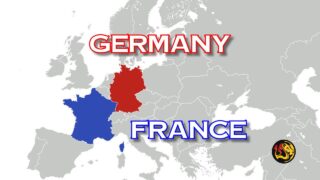
BERLIN/PARIS/BUDAPEST (Worthy News) – Europe’s largest economy plunged into political turmoil Tuesday after German Chancellor Olaf Scholz lost a vote of confidence, while in neighboring France, new Premier François Bayrou struggled to raise support for France’s budget without being overthrown.
With Germany experiencing the worst social upheaval in decades, Scholz saw 394 legislators giving up their trust in the government. Only 207 supported him, while 116 members of the German parliament, the Bundestag, abstained, leaving him well short of the required 367 votes for a majority.
This was despite the chancellor’s last-ditch attempt to win over parliamentarians with promises of massive spending on security, business, and social welfare, which saw his rival Friedrich Merz accuse him of being “on another planet.”
Merz used every opportunity to attack Scholz in parliament, saying his reign in office had been a “failure” marked by economic stagnation and international embarrassment.
“You’ve had your chance, Herr Scholz, and you squandered it. Today is a day of relief for Germany,” said the chairman of the conservative Christian Democratic Union (CDU) party. “It’s shameful how this government has handled Germany’s position in the European Union.”
Commentators said losing Monday’s no-confidence vote was the outcome Scholz had wanted.Thanks to the loss, elections can now happen on February 23 rather than in September as originally scheduled.
Given Germany’s stalled economy and the global crises facing the West, staggering on until the scheduled election date of September 2025 risked being seen as irresponsible by the electorate, analysts said.
CAR CRISIS
It came amid post-war Germany’s worst car sector crisis. Around 100,000 workers have already downed tools for several hours on two separate occasions in the past month, the most significant strikes ever seen at Volkswagen, Europe’s biggest carmaker.
They have been protesting against management plans to slash wages, cut capacity, and potentially shut German plants for the first time in the company’s history. Volkswagen, according to industry watchers, is struggling with falling demand, rising costs, and cheap competition from China.
The situation isn’t much better in nearby France, the eurozone’s biggest economy, where adopting a budget for 2025 is the most urgent file on Bayrou’s desk.
President Emmanuel Macron appointed the centrist Bayrou prime minister on Friday. He succeeds Michel Barnier, whose government recently collapsed over precisely these tensions on the public finances.
France is facing an “excessive deficit procedure” in Brussels for overspending last year, and the European Commission, the European Union’s executive branch, could even impose fines if Paris doesn’t manage to reduce its deficit.
The French deficit reached 6.2 percent of the country’s gross domestic product (GDP) this year alone. “Nobody knows better than me the difficulty of the situation,” he said ahead of Monday and Tuesday’s talks with political leaders.
Yet, like in Germany, it remained unclear if and how France’s current leaders will be able to restore confidence in their handling of the economy and other burning issues.
(With additional reporting by the Worthy News Europe Bureau in Budapest.)
Copyright 1999-2026 Worthy News. This article was originally published on Worthy News and was reproduced with permission.
Latest News from Worthy News

Swiss voters narrowly rejected a proposal Sunday to cap the Alpine nation’s population at 10 million people by 2050 amid concerns over rising immigration, including from predominantly Muslim countries, dealing a setback to the country’s largest right-wing party and avoiding a clash with the European Union over freedom of movement.

Hungary’s largest opposition party, Fidesz, re-elected former Prime Minister Viktor Orbán as its leader Saturday despite the party’s crushing election defeat in April and fresh allegations that his government secretly considered establishing a migrant reception center while publicly opposing migration.

Brazil was rocked by a second fatal accident in less than 48 hours Sunday when two helicopters collided over Rio de Janeiro, killing all six people aboard, including American singer and internet personality Oliver Tree, a day after a young woman died in a rope-jumping accident in São Paulo state.

A teenage girl has been released from hospital after she was stabbed in the neck while walking down the street in an incident that heightened tensions over migration across the United Kingdom.

Christians in northeastern Pakistan expressed grief Sunday over the killing of a young Christian man by armed Muslims who also allegedly threatened women, sources told Worthy News.

U.S. President Donald J. Trump and Pakistani Prime Minister Shehbaz Sharif announced Sunday that the United States and Iran had reached what they described as a peace agreement aimed at ending months of conflict and reopening the strategically important Strait of Hormuz.

U.S. President Donald J. Trump criticized an Israeli airstrike on Beirut Sunday that overshadowed his 80th birthday and threatened to complicate efforts to finalize a U.S.-Iran framework agreement aimed at ending months of armed conflict across the Middle East.