
by Worthy News Washington D.C. Bureau Staff
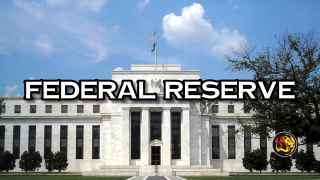
(Worthy News) – In a closely watched decision Wednesday, the Federal Reserve voted to hold interest rates steady for the fifth consecutive meeting, keeping its benchmark federal funds rate in a range of 4.25% to 4.5%. The 9-2 vote revealed rare dissent within the Fed’s leadership, as two Trump-appointed governors–Michelle Bowman and Christopher Waller–called for an immediate rate cut, citing risks to the labor market and signs of cooling inflation.
The decision arrives amid growing political pressure from President Donald Trump, who has publicly lambasted Fed Chairman Jerome Powell and demanded lower rates to boost economic growth. Speaking ahead of the meeting, Trump praised recent GDP growth and renewed calls for a rate cut, accusing Powell of holding back the U.S. economy and blaming him for keeping the nation’s interest rates among the highest globally. “We’re number 38 because of the Fed,” Trump said. “He’s done a bad job.”
Despite the criticism, Powell remained measured, emphasizing the Fed’s responsibility to keep inflation in check without damaging the labor market. “We want to do that efficiently,” Powell said. “If you move too soon, you wind up maybe not getting inflation all the way fixed. If you move too late, you might do unnecessary damage to the labor market.” He refused to commit to a September rate cut, stating simply, “No decision has been made.”
This was the first meeting since 1993 where multiple Fed governors dissented, marking a notable shift in the normally unified front of the central bank. Bowman’s vote for a cut was especially striking, as she has long been one of the strongest advocates for tighter monetary policy.
The Fed’s deliberations come as economic data paints a mixed picture. GDP growth for the second quarter came in at 3%, beating Wall Street expectations. But underlying demand, as measured by private business and consumer spending, slowed to 1.2%. Inflation, meanwhile, has declined sharply from its 2022 peak, but June’s Consumer Price Index still rose at an annualized pace of 2.7%–above the Fed’s 2% target–driven in part by new tariffs enacted by the Trump administration.
Tariffs have emerged as a key uncertainty. Businesses initially absorbed higher costs by tapping into stockpiled inventory, but some economists warn that those buffers are running out. As companies with thinner margins face higher import duties, they may increasingly pass costs onto consumers, threatening renewed inflation pressures. Powell acknowledged the uncertainty, noting that the impact of tariffs on inflation “will probably be slower than expected” and require further observation.
Trump’s trade agenda is also complicating the Fed’s outlook. New deals with Japan and the European Union locked in 15% tariffs–less than initial threats but still higher than forecasts. While these moves have yet to spark retaliation, analysts warn of potential economic drag. At the same time, Trump’s recent tax cuts and discussions of consumer rebates could inject fresh stimulus into an economy already operating near full capacity.
The political drama intensified as Trump suggested Powell could be removed over cost overruns in the Fed’s headquarters renovation. Though such a move is legally limited, it reflects Trump’s broader frustration with a central bank he sees as obstructing his economic vision.
Markets reacted cautiously to the Fed’s announcement. The Dow Jones Industrial Average closed down 171 points, or 0.3%, while expectations for a September rate cut declined to about 45% according to futures markets.
Ultimately, the Fed faces a delicate balancing act in the months ahead. If inflation persists, it may be forced to hold rates despite weakening demand. If the economy shows clearer signs of strain, the case for a cut will grow. As Powell put it, the challenge is avoiding both premature easing and delayed action: “We see our current policy stance as appropriate to guard against inflation risks.”
With Powell’s term set to expire next May and Waller emerging as a possible successor, the internal divide could deepen further. The September meeting now looms as a pivotal moment–not just for the U.S. economy, but for the Fed’s future direction under intensifying political and economic crosscurrents.
Copyright 1999-2026 Worthy News. This article was originally published on Worthy News and was reproduced with permission.
Latest News from Worthy News
U.S. Secretary of State Marco Rubio confirmed Wednesday that Israel and Lebanon are discussing a possible scale-back of Israeli troops from southern Lebanon as part of U.S.-mediated negotiations in Washington.
Canadian police have warned of possible copycat attacks after a deadly shooting in Montreal left three people dead, including a police officer, and a manifesto linked to the gunman was circulated online.

A deadly heatwave tightened its grip on Europe Wednesday, sending temperatures soaring to record levels, straining power grids, disrupting transport, and raising fears of additional casualties across the continent.
President Donald Trump abruptly canceled a scheduled signing ceremony Wednesday for a major bipartisan housing bill, saying Congress must first pass election integrity legislation requiring proof of U.S. citizenship for federal voter registration.

A new report from conservative publisher Brave Books alleges that Christianity is being scrubbed from the American story as public libraries, children’s publishers, and other institutions prepare young readers for America’s 250th anniversary.

Alan Greenspan, the longtime chairman of the U.S. Federal Reserve whose influence shaped American economic policy for nearly two decades, has died at the age of 100.
President Donald Trump sharply criticized the U.S. Senate after lawmakers approved a war powers resolution aimed at limiting his authority to conduct military operations against Iran, calling the vote “poorly timed and meaningless” as his administration continues negotiations with Tehran.