
By Stefan J. Bos, Chief International Correspondent Worthy News
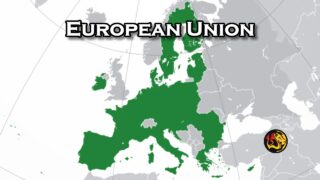
BRUSSELS/BUDAPEST (Worthy News) – The European Union has urged its 450 million citizens to stockpile food, water, and other essentials to last at least 72 hours amid mounting concerns that the war in Ukraine will escalate into a broader armed conflict.
Other threats such as cyberattacks, “climate change,” and disease also increase the chances of a crisis, according to the European Commission, the EU’s executive.
Hadja Lahbib, the European commissioner in charge of preparedness and crisis management, said that concerns differed across the bloc but that all citizens should make an effort to be prepared for emergencies.
“Ready for anything – this must be our new European way of life,” she wrote on media platform Х, formerly Twitter.
In a social media video message, Lahbib listed items essential to survive 72 hours in a crisis, from food and water to a flashlight, power bank, radio, cash, and medication.
The call to action comes as the 27-nation EU rethinks security after the administration of U.S. President Donald J. Trump warned that Europe must take more responsibility for its defense.
In recent years, the EU weathered the COVID-19 pandemic and the threat from Russia, including its perceived attempts to exploit Europe’s dependence on its natural gas to weaken support for Ukraine.
WAR MONGERING?
NATO Secretary-General Mark Rutte has warned that Russia could be capable of launching another attack in Europe by 2030, as Moscow already invaded Ukraine in February 2022.
Critics have accused him of warmongering, prompting the EU to allocate 800 billion euros ($863.5 billion) to “rearm Europe.”
Yet the Commission said in its new EU
Preparedness Union Strategy, monitored by Worthy News on Thursday, said that the bloc was preparing for risks, including the possibility of armed aggression as well as natural disasters, cyber-attacks, and geopolitical crises.
“Families living in flood zones should know what to do when the waters rise,”
said European Commission President Ursula von der Leyen.
“Early warning systems can prevent regions hit by wildfires from losing precious time,” she stressed.
The strategy focuses on improving early warning systems, ensuring the continuity of essential services such as healthcare and drinking water, and helping citizens prepare for crises.
Copyright 1999-2026 Worthy News. This article was originally published on Worthy News and was reproduced with permission.
Latest News from Worthy News

President Donald Trump abruptly canceled planned U.S. strikes against Iran on Thursday, saying a multinational agreement to end the conflict had been approved by top Iranian leadership and was awaiting final documents and a formal signing.

Federal authorities said Thursday they have accounted for 146,000 unaccompanied migrant children who entered the United States during former President Joe Biden’s administration, while roughly 300,000 minors remain unaccounted for, amid allegations that many vulnerable children were placed with fraudulent sponsors and exposed to abuse, labor exploitation, and sex trafficking.

Congress left Washington without renewing Section 702 of the Foreign Intelligence Surveillance Act, allowing a key foreign surveillance authority used to track foreign terrorists and national security threats to expire Friday.

The U.S. Court of Appeals for the Federal Circuit on June 11 temporarily allowed President Donald Trump’s 10 percent global tariffs to remain in effect, extending a pause on a lower court ruling that had struck down the duties as unlawful.

Dutch police detained a young man l man after four people, including three children, were killed when a car struck a group of cyclists during a school outing near the Belgian border on Thursday, officials said.

The leaders of Hungary, Poland, the Czech Republic, and Slovakia are expected to meet this month amid growing debate within the European Union over how future member states should be admitted and monitored.

China has condemned the European Union’s ban on public funding for Chinese-made solar inverters, a move that analysts say could affect more than a fifth of new solar capacity and complicate efforts to meet the bloc’s self-imposed “climate targets.”