
By Stefan J. Bos, Chief International Correspondent Worthy News
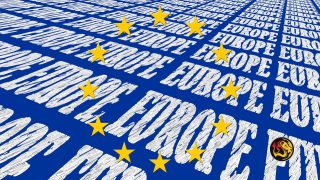
BRUSSELS (Worthy News) – Mario Draghi has warned that the European Union needs a roughly 800 billion euros ($883 billion) annual spending boost combined with rapid decisions and coordinated industrial policies if it wants to keep pace economically with rivals the United States and China.
In a long-awaited report requested by the EU’s executive European Commission, the former European Central Bank chief and Italian prime minister raised doubts about the EU’s current “greening” let’s-save-the-Earth-approache and its more digital economy at a time of increased global tensions.
“We’re going to be a society that basically shrinks,” Draghi said in Brussels as he presented his ideas to relaunch the economy of the 27-nation bloc of 450 millionpeople and hold back the tide of American and Chinese dominance.
It was his 77th birthday last week, and journalists noted that those celebrations played a part in the bleak analogy: “We share this cake which becomes smaller and smaller ― with a smaller number of people.”
The EU should fear for its self-preservation as it faces a “slow and agonizing decline,” according to Draghi’s hard-hitting report.
However, his calls for additional investments of 750-800 billion euros – equivalent to 5 percent of the EU’s annual economic output – were not eagerly awaited by member states such as Germany and the Netherlands, which are among the most significant net contributors to the EU.
MORE STRUGGLES
Germany itself is struggling to keep its long-revered automobile industry running, while the Netherlands already faces massive strikes over pension reforms.
Yet Draghi said the money was needed to build a more resilient economy and regain previously high productivity growth rates.
“It’s ‘Do this,’ or it’s a slow agony,'” Draghi warned. Draghi’s report said EU countries had already responded to the new realities, but it added that a lack of coordination limited their effectiveness.
He noticed that differing levels of subsidies between countries disturbed the single market, fragmentation limited the scale required to compete on a global level, and the EU’s decision-making process was complex and sluggish.
Several members of the EU’s European Parliament welcomed the report, saying it was “a wake-up call” to EU member states and Brussels policymakers. “We need to take swift and significant action on EU competitiveness,” said Christian Ehler, a German legislator for the centre-right European People’s Party (EPP).
However, Martin Schirdewan, one of the co-chairs of Parliament’s most far-left bloc (The Left), condemned the report as the work of industry lobbyists setting the political agenda. “I fear that even though it falls short of what is needed now, it’s going to be quite influential.”
He said he fears the European Commission and the Parliament’s liberal and conservative blocs “will always refer to this report as kind of a playbook for a European industry and economic strategy.”
Copyright 1999-2026 Worthy News. This article was originally published on Worthy News and was reproduced with permission.
Latest News from Worthy News
Iran’s Supreme Leader Mojtaba Khamenei’s statement following the signing of a memorandum of understanding with the United States is being viewed by analysts not as an embrace of peace, but as a carefully crafted declaration that preserves Tehran’s revolutionary posture while allowing the regime to regroup.

The United States imposed new sanctions Thursday on individuals and entities linked to Hezbollah, accusing them of using political and financial influence to obstruct Lebanon’s peace process and delay the Iran-backed group’s disarmament.
Ukraine launched one of its largest drone attacks on Moscow since the war began, hitting a key oil refinery and other targets around the Russian capital, leaving at least one person dead and numerous others injured, Russian officials said.
Russian President Vladimir Putin hosted Southeast Asian leaders in Kazan this week as Moscow moved to deepen ties with the Association of Southeast Asian Nations and promote its vision of a “multipolar world order” aimed at countering U.S. global dominance.

Israeli Prime Minister Benjamin Netanyahu said Thursday that Israeli troops will not withdraw from southern Lebanon and will maintain a security zone there for as long as Israel’s defense needs require, placing Jerusalem at odds with both Tehran and the terms of a U.S.-Iran memorandum that calls for an end to hostilities in Lebanon.

U.S. Defense Secretary Pete Hegseth told NATO leaders Thursday that the Pentagon is launching a six-month review of U.S. force posture and basing in Europe, signaling a major push by the Trump administration to ensure European allies assume primary responsibility for defending the continent.
President Donald Trump has invoked the Cold War-era Defense Production Act to accelerate the production of U.S. munitions, missiles, interceptors, and critical defense components as American stockpiles face mounting strain from the war with Iran and years of heavy weapons transfers to allies, including Ukraine and Israel.