
By Stefan J. Bos, Chief International Correspondent Worthy News
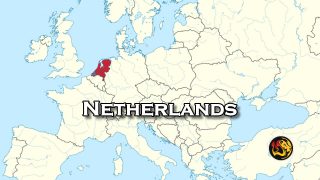
AMSTERDAM (Worthy News) – Dutch voters cast ballots Wednesday in an unpredictable election overshadowed by two violent attacks on a nationalist leader who had been critical about migration, climate change, the war in Ukraine, and perceived LGBTQ+ propaganda among children.
Thierry Baudet, leader of the radical rightwing party Forum voor Democratie (Forum for Democracy), was taken to hospital in Groningen this week after he was hit on the head several times by someone wielding a beer bottle.
It was the second physical attack on Baudet within a month. Late October, Baudet was hit on the head with an umbrella as he arrived at a meeting at the University of Ghent, Belgium.
Baudet was about to enter the building to give a lecture talk when a single umbrella blow hit him. The perpetrator, who was only briefly detained, shouted “No to fascism, no to Putinism” in Ukrainian as he attacked the legislator.
The attacks brought back memories among voters of anti-Islam legislator Pim Fortuyn, who was assassinated in 2002.
Animal rights activist Volkert van der Graaf was sentenced to 18 years for shooting Fortuyn dead in what was arguably the first assassination in the country since 1672.
The recent attacks on Baudet underscored the polarized political climate in the Netherlands, long seen as a beacon of liberalism.
WOMAN PRIME MINISTER
On Wednesday, voters in this nation of 17.5 million could elect the Netherlands’ first woman prime minister. Dilan Yesilgoz, leader of the right-leaning liberal VVD party and successor to Mark Rutte, one of Europe’s longest-serving government leaders, hopes to clinch the top job.
Born in Turkey, it has been a long way for the charismatic 46-year-old who arrived in the Netherlands at the age of eight with her dissident parents fleeing persecution.
Hard-working and media-savvy with a solid social media presence, Yesilgoz shrugs off the fact she would make history as the first woman prime minister but also said: “It’s about time.”
She faces stiff opposition from Frans Timmermans, the former European Union heavyweight, on what he believes is human-caused climate change. After rolling out the EU-wide Green Deal that critics say impacted farmers, he returned to the Netherlands to lead a GreenLeft/Labour alliance.
He appealed to voters to keep out a government in which he claims the “far-right plays a role.”
It appeared to be having an effect, with almost half of his supporters voting strategically for him instead of smaller parties, according to the latest polls.
Pieter Omtzigt, leader of the New Social Contract (NSC) – a new center-right party campaigning for better governance and controlled immigration – has also said he will not enter a coalition that contained the anti-Islam PVV party of firebrand politician Geert Wilders.
MANY NEW SEATS
The most recent survey showed a 10-seat gain by the PVV to 27 seats of the total 150 in parliament, putting Wilders closely behind the VVD on 29.
The PVV’s manifesto calls for an immigration “stop,” a ban on Islamic schools, mosques, and the Koran. The strongly pro-Israel politician has also defended Israel’s actions in Gaza and expressed concern about rising anti-semitism in the Netherlands.
The last government fell in July over the issue of asylum seekers, and Wilders wants the Netherlands to close its borders to most asylum seekers, saying the small nation can no longer cope with the influx of hundreds of thousands of migrants, including workers, international students, and asylum seekers.
Whatever emerges, this election will shift the Dutch political landscape.
Some 26 parties are standing on pressing issues including housing, immigration, guaranteeing a basic standard of living and climate change.
Whoever wins, long coalition talks are expected.
Copyright 1999-2026 Worthy News. This article was originally published on Worthy News and was reproduced with permission.
Latest News from Worthy News

A Dutch community remained in shock Saturday after a 13-year-old girl was detained following the discovery of her parents’ bodies in their home in the northern Netherlands.
Bolivian President Rodrigo Paz declared a 90-day state of emergency Saturday, empowering the military to clear road blockades after nearly 50 days of anti-government protests that have included widespread road blockades, leaving at least 14 people dead and crippling the nation’s economy.
A powerful thunderstorm system sweeping across Western Europe killed at least one person in the Netherlands, injured several others in Belgium and Germany, and caused widespread damage as nearly 190,000 lightning flashes illuminated the skies, authorities said Saturday.

Israeli strikes killed at least 10 people in Lebanon on Saturday despite a ceasefire that took effect hours earlier, officials said, with Israel claiming it was responding to attacks by the Iran-backed Hezbollah group.

Israel and Iran-backed Hezbollah have agreed to a ceasefire that was to begin Friday afternoon, Worthy News learned.

At least 10 people, including four children, were injured in a Russian strike on Ukraine’s northeastern Kharkiv region, Ukrainian authorities said Friday. In southern Ukraine, the State Emergency Service reported that one person was killed and four others were injured in a separate Russian attack on the Odesa region.

President Donald Trump signed the temporary peace deal with Iran ahead of schedule Wednesday at the Palace of Versailles in France, kicking off negotiations over a final nuclear deal.