
By Stefan J. Bos, Chief International Correspondent Worthy News
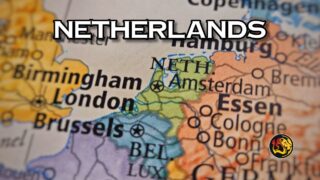
THE HAGUE, NETHERLANDS (Worthy News) – The hopes of the anti-Islam Dutch lawmaker Geert Wilders’ to become prime minister of the Netherlands were dwindling Wednesday after coalition talks collapsed.
The New Social Contract (NSC) party’s leader, Pieter Omtzigt, walked away from the negotiations, saying he had not been informed about the true state of the nation’s economy and budget.
Critics said he looked for a way out of the talks after he earlier questioned Wilders’ commitment to the constitution and the rule of law.
Wilders, a fierce pro-Israel politician whose Party for Freedom (PVV) became the most significant political force in the country, has made clear he will respect the constitution.
The PVV has, however, questioned the ongoing influx of mainly Muslim migrants through “safe countries” into the Netherlands.
Yet Wilders, a dedicated pro-Israel politician, sought to appease those accusing him of dangerous far-right views:
He withdrew draft legislation that included a ban on mosques, Islamic schools, and the Koran that he once compared to Donald Duck cartoons.
TENSIONS REMAIN
Despite the concessions, tensions came to a head Tuesday night when Omtzigt walked out of the coalition talks.
The official shepherding the negotiations, Ronald Plasterk, was visibly upset and surprised by Omtzigt’s move.
He was due to report to lawmakers within days on any progress the parties had made during two months of closed-door meetings following the elections.
Yet Omtzigt countered it was clear that PVV and NSC have “different financial expectations” for the years ahead.
“Under no circumstances does NSC want to make promises to Dutch people, which it knows in advance are empty promises that cannot be kept during the coming cabinet period. You don’t build social security with castles in the sky,” he said.
The collapse in talks has added to uncertainty in the Netherlands during mounting tensions over migration.
Additionally, farmers have taken to the streets, fearing losing their livelihood due to increasingly strict nitrogen requirements and other measures that the government says are urgently needed to improve the environment and help stop climate change.
FOSSIL FUELS
Dutch people must also prepare for a future without fossil fuels within years. However, several energy companies have warned they can’t guarantee uninterrupted electricity to households.
Wilders, who won a quarter of the vote in a historic victory for his party, has been negotiating with the NSC, the center-right liberal VVD of outgoing Prime Minister Mark Rutte, and the farmers’ protest party BBB since late November.
BBB leader Caroline van der Plas described the collapse in talks as a “total surprise,” noting that they had been progressing constructively until now. However, Plasterk, a former Labor Party minister, earlier flagged finances as a central sticking point in talks.
That comes after the Dutch central bank said the incoming coalition must find around 17 billion euros ($18.3 billion) in structural spending cuts to keep public finances steady.
Wilders — an anti-immigration Euroskeptic who has called for a “Nexit,” or the Netherlands exit from the European Union — has previously voiced his resistance to significant spending cuts and pledged to lead a government of lower taxes by cutting on “climate change hobbies” and aid to poorer countries.
His surprise November victory sent shockwaves among liberals in Europe, where populist and far-right parties have been making gains ahead of European parliament elections in June.
Their popularity has been linked to discontent over immigration, green policies, and the cost-of-living crisis. Still, the disagreement with his largest potential coalition partner could leave the PVV unable to form a majority in the Netherlands’ 150-seat lower legislative body, analysts warn.
Latest opinion polls also suggest his PVV party would receive a stunning 50 seats in the 150-seat lower house of parliament, up from 37 now.
Copyright 1999-2026 Worthy News. This article was originally published on Worthy News and was reproduced with permission.
Latest News from Worthy News

Israel and Iran-backed Hezbollah have agreed to a ceasefire that was to begin Friday afternoon, Worthy News learned.

At least 10 people, including four children, were injured in a Russian strike on Ukraine’s northeastern Kharkiv region, Ukrainian authorities said Friday. In southern Ukraine, the State Emergency Service reported that one person was killed and four others were injured in a separate Russian attack on the Odesa region.

President Donald Trump signed the temporary peace deal with Iran ahead of schedule Wednesday at the Palace of Versailles in France, kicking off negotiations over a final nuclear deal.
Iran’s Supreme Leader Mojtaba Khamenei’s statement following the signing of a memorandum of understanding with the United States is being viewed by analysts not as an embrace of peace, but as a carefully crafted declaration that preserves Tehran’s revolutionary posture while allowing the regime to regroup.

The United States imposed new sanctions Thursday on individuals and entities linked to Hezbollah, accusing them of using political and financial influence to obstruct Lebanon’s peace process and delay the Iran-backed group’s disarmament.
Ukraine launched one of its largest drone attacks on Moscow since the war began, hitting a key oil refinery and other targets around the Russian capital, leaving at least one person dead and numerous others injured, Russian officials said.

Russian President Vladimir Putin hosted Southeast Asian leaders in Kazan this week as Moscow moved to deepen ties with the Association of Southeast Asian Nations and promote its vision of a “multipolar world order” aimed at countering U.S. global dominance.