
by Stefan J. Bos, Worthy News Europe Bureau Chief
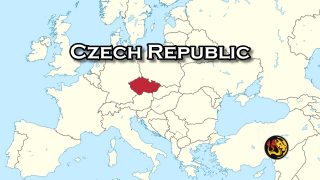
PRAGUE/BUDAPEST (Worthy News) – Former Czech Prime Minister Andrej Babiš, 71, announced Monday that he had formed a new governing coalition with right-wing and anti-Islam partners, triggering immediate controversy over his plan to appoint a foreign minister accused of racist and abusive behavior.
Babiš, a populist billionaire and leader of the ANO (Yes) party, signed a coalition agreement with the Motorists for Themselves (AUTO) movement and the Freedom and Direct Democracy (SPD) party — both known for anti-Islam, anti-immigration, and Eurosceptic views. The deal gives him a working majority in the 200-seat parliament following last month’s election victory.
The coalition marks a sharp turn to the right in Czech politics and is expected to strain relations with Brussels, as both of Babiš’s partners have campaigned on nationalist platforms emphasizing sovereignty over EU integration.
Babiš — a close ally of Hungarian Prime Minister Viktor Orbán — has long clashed with the European Union over rule-of-law issues, media freedoms, and migration policies. His return to power is seen as part of a broader populist resurgence across Central and Eastern Europe.
Like Orbán, the incoming prime minister has also faced tensions with Brussels over investigations into his business empire, including conflict-of-interest allegations linked to his Agrofert conglomerate, which he denies.
NOMINEE UNDER SCRUTINY
Controversy erupted over the coalition’s choice for foreign minister, Filip Turek, 40, a member of the Motorists for Themselves party and a former racing driver. Czech media have uncovered a series of racist, sexist, and homophobic social-media posts attributed to Turek, which he later deleted.
He has also faced accusations of abusive behavior from a former partner and an investigation into a photo allegedly showing him making a Nazi salute — charges he denies, claiming they are part of a “politically motivated smear campaign.”
Czech police confirmed they are reviewing the allegations, while opposition parties and civic groups have urged President Petr Pavel not to approve Turek’s appointment.
President Petr Pavel said Monday that he would “not jump to premature conclusions” but would ensure that any ministerial nominations meet ethical and legal standards before signing them.
Outgoing Prime Minister Petr Fiala of the Civic Democrats conceded defeat, saying his centrist coalition would move into opposition but warning that “the Czech Republic must remain a democracy committed to European values.”
FOREIGN POLICY SHIFT
If confirmed, the new coalition is expected to adopt a more nationalist and EU-skeptical agenda, with potential implications for Czech support to Ukraine and its alignment with EU sanctions against Russia.
Analysts in Prague and Brussels warn that the coalition could deepen divisions within the European Union, aligning the Czech Republic more closely with Hungary and Slovakia, whose leaders have similarly challenged EU institutions.
Thousands of Czechs protested outside the parliament over the weekend, chanting “No racists in government!” and “Protect our democracy!”
Civic groups have announced plans for further demonstrations if Turek’s appointment is confirmed.
Despite the growing unrest, Babiš defended his choice, saying his coalition “represents the real people of this country, not the Brussels elite,” and vowed to focus on “security, energy independence, and sovereignty.”
Copyright 1999-2026 Worthy News. This article was originally published on Worthy News and was reproduced with permission.
Latest News from Worthy News

Thousands of police officers were deployed across South Africa this week after large-scale protests against illegal immigration erupted into violence, looting, and clashes with authorities across multiple cities.

Archaeologists excavating biblical Shiloh say new discoveries may strengthen the case that they have uncovered ruins connected to the ancient Israelite Tabernacle — the sacred worship center where Scripture says the Ark of the Covenant once rested.

Russian drone developers and operators are openly framing their next major gathering around preparation for a possible war with NATO, raising fresh concerns across Europe as the Kremlin continues to deny any intention of attacking the alliance.

President Donald Trump announced that the Republican Party will hold its first-ever national midterm convention this September in Dallas, an unprecedented political gathering designed to energize conservatives, showcase the administration’s record, and build momentum before the 2026 congressional elections.

A new red heifer born in Israel’s Galilee region has reignited calls among Temple-focused rabbis, educators, and activists for a broader national movement to prepare the Jewish people for the restoration of Temple service in Jerusalem.

Ukraine’s war against Russia is entering a sharper and more economically painful phase, as Kyiv’s long-range drone campaign continues to hammer Russian oil infrastructure, triggering fuel shortages across parts of the country and placing growing political pressure on President Vladimir Putin.

A California judge has sentenced Loay Abdel Fattah Alnaji to one year in Ventura County Jail and two years of felony probation for the death of Paul Kessler, a 69-year-old Jewish-American man who died after a confrontation during dueling pro-Israel and pro-Palestinian demonstrations in Thousand Oaks in November 2023.