
By Stefan J. Bos, Chief International Correspondent Worthy News
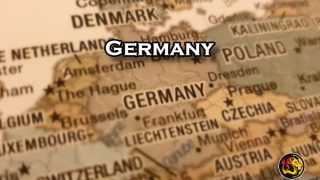
BERLIN/BUDAPEST (Worthy News) – Germany’s Christian Democratic Union (CDU/CSU), led by Friedrich Merz, has won the German Federal Election, known for its anti-migration stance and considered right-wing, emerged as the second-largest faction, exit polls showed Sunday.
If confirmed as expected, the outcome would put Merz, 69, on the path to becoming the next chancellor of Europe’s largest economy.
Yet it marked a significant shift to the right in German politics as the AfD became the nation’s second-largest political force, despite concerns about past neo-Nazi tendencies within its ranks.
The conservative Merz, who rules out forming a coalition government with the AfD, will need to ally with at least one party, most likely outgoing Chancellor Olaf Scholz’s Social Democrats.
Scholz’s ruling “traffic light coalition” of the Social Democratic Party (SPD), the Free Democratic Party (FDP), and Alliance 90/The Greens, named after the parties’ traditional colors, red, yellow, and green, collapsed last year over a budget deficit.
Merz promised “to fix” most problems in four years, including massive migration, economic difficulties, and a car industry struggling to catch up with China‘s electric vehicles flooding the European markets.
Yet, with a strong AfD and economic headwind, it was unclear whether he could realize his ambitious political agenda.
ISLAMIC VIOLENCE
Sunday’s voting came in a nation still in shock after several attacks linked to Islamic migrants, including a stabbing near the Holocaust Museum in Berlin, which injured a 30-year-old Spanish tourist on Friday.
Amid mounting public anger over these and other attacks, many voters turns their back to the established parties, the outcome suggested.
The AfD will almost double from over 10 to nearly 20 percent, its most significant success ever, according to forecasts.
The Social Democrats likely achieved their worst result ever in the Bundestag, Germany parliament with a reported 16 percent of the vote. The CDU/CSU will reach 29 percent, exit polls showed.
The Greens and the far-left Die Linke were both clearly above the electoral threshold of 5 percent with 13.5 and 8.5 percent respectively.
However the liberal Free Democratic Party or FDP, which left Scholz’s government at the end of last year, may not return as it received just 4.9 percent of the votes, according to forecasts.
The new party, BSW, a split from Die Linke, would remain just below the 4.7 percent threshold.
Copyright 1999-2026 Worthy News. This article was originally published on Worthy News and was reproduced with permission.
Latest News from Worthy News

President Donald Trump abruptly canceled planned U.S. strikes against Iran on Thursday, saying a multinational agreement to end the conflict had been approved by top Iranian leadership and was awaiting final documents and a formal signing.

Federal authorities said Thursday they have accounted for 146,000 unaccompanied migrant children who entered the United States during former President Joe Biden’s administration, while roughly 300,000 minors remain unaccounted for, amid allegations that many vulnerable children were placed with fraudulent sponsors and exposed to abuse, labor exploitation, and sex trafficking.
Congress left Washington without renewing Section 702 of the Foreign Intelligence Surveillance Act, allowing a key foreign surveillance authority used to track foreign terrorists and national security threats to expire Friday.

The U.S. Court of Appeals for the Federal Circuit on June 11 temporarily allowed President Donald Trump’s 10 percent global tariffs to remain in effect, extending a pause on a lower court ruling that had struck down the duties as unlawful.

Dutch police detained a young man l man after four people, including three children, were killed when a car struck a group of cyclists during a school outing near the Belgian border on Thursday, officials said.
The leaders of Hungary, Poland, the Czech Republic, and Slovakia are expected to meet this month amid growing debate within the European Union over how future member states should be admitted and monitored.

China has condemned the European Union’s ban on public funding for Chinese-made solar inverters, a move that analysts say could affect more than a fifth of new solar capacity and complicate efforts to meet the bloc’s self-imposed “climate targets.”