
By Stefan J. Bos, Chief International Correspondent Worthy News
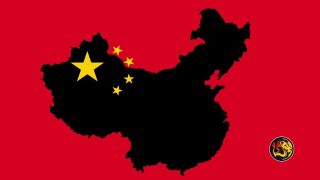
BEIJING (Worthy News) – China’s battle with the West over control of the world’s critical minerals rapidly escalated Friday after the Communist nation banned the export of production technology for rare earth metals.
Rare earths are a group of 17 metals used to make magnets that turn power into motion for use in electric vehicles, wind turbines, electronics, medical devices, and weaponry, where China has a virtual monopoly on refining.
Western countries have tried launching their rare earth processing operations, but that has been complicated by China’s ban on exporting technology to extract and separate the critical materials.
As the world’s top processor of rare earths, China’s commerce ministry has also sought public opinion on its intention to add the technology to its “Catalogue of Technologies Prohibited and Restricted from Export”
The catalog’s aims include protecting “national security and public interest.”
China has significantly tightened rules guiding exports of several metals this year.
It already introduced export permits for chipmaking materials gallium and germanium in August, followed by similar requirements for several types of graphite since December 1.
Despite difficulties, Europe and the United States scramble to wean themselves off rare earths from China, which accounts for nearly 90 percent of global refined output.
Copyright 1999-2026 Worthy News. This article was originally published on Worthy News and was reproduced with permission.
Latest News from Worthy News

A Dutch community remained in shock Saturday after a 13-year-old girl was detained following the discovery of her parents’ bodies in their home in the northern Netherlands.
Bolivian President Rodrigo Paz declared a 90-day state of emergency Saturday, empowering the military to clear road blockades after nearly 50 days of anti-government protests that have included widespread road blockades, leaving at least 14 people dead and crippling the nation’s economy.
A powerful thunderstorm system sweeping across Western Europe killed at least one person in the Netherlands, injured several others in Belgium and Germany, and caused widespread damage as nearly 190,000 lightning flashes illuminated the skies, authorities said Saturday.

Israeli strikes killed at least 10 people in Lebanon on Saturday despite a ceasefire that took effect hours earlier, officials said, with Israel claiming it was responding to attacks by the Iran-backed Hezbollah group.

Israel and Iran-backed Hezbollah have agreed to a ceasefire that was to begin Friday afternoon, Worthy News learned.

At least 10 people, including four children, were injured in a Russian strike on Ukraine’s northeastern Kharkiv region, Ukrainian authorities said Friday. In southern Ukraine, the State Emergency Service reported that one person was killed and four others were injured in a separate Russian attack on the Odesa region.

President Donald Trump signed the temporary peace deal with Iran ahead of schedule Wednesday at the Palace of Versailles in France, kicking off negotiations over a final nuclear deal.