
by Emmitt Barry, with reporting from Washington D.C. Bureau Staff
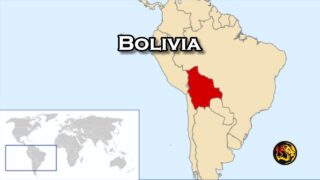
(Worthy News) – Bolivia’s decades-long experiment with socialism was decisively rejected at the ballot box Sunday, as voters punished the ruling Movement Toward Socialism (MAS) for economic collapse and moral scandal. The result signals a historic shift away from leftist politics and toward a more open future for both free markets and faith.
Centrist senator Rodrigo Paz stunned observers by winning 32% of the vote, edging out conservative former president Jorge Quiroga, who captured 27%. The two will now face each other in an October runoff. MAS, the party of former leader Evo Morales, was humiliated as its candidate managed just 3% support–its worst showing in nearly 20 years.
Socialism’s Collapse
Bolivia, once buoyed by natural gas exports, has spiraled into crisis as production has fallen, reserves have dwindled, and subsidies have drained the treasury. Inflation now hovers around 24%, the highest in three decades, with shortages of food, and fuel driving voter anger.
The political fall of MAS mirrors the personal decline of Evo Morales, who is holed up in his coca-growing stronghold facing allegations of abuse. At the same time, his former ally, President Luis Arce, opted not to run, crippled by unpopularity.
“This is the end of socialism in Bolivia,” said one voter in El Alto. “We want bread on the table, we want stability, and we want change.”
While politics shift, a quiet transformation is underway in Bolivia’s spiritual life. Evangelical churches have surged in numbers over the last two decades, with recent surveys estimating that nearly one in five Bolivians now identify as evangelical–a dramatic rise from just over 13% in 2015.
This growth is most visible in urban neighborhoods and among the poor, where evangelical congregations have offered both community support and a message of hope amid economic despair. In cities like Santa Cruz, La Paz, and Cochabamba, evangelical leaders are increasingly visible in civic discussions, speaking out on issues of morality, corruption, and family life.
Their influence reflects a broader trend across Latin America, where evangelicals are reshaping the cultural and political landscape. In Bolivia, the rise of evangelical faith coincides with the decline of socialist ideology, offering an alternative moral foundation rooted in biblical values rather than state-centered promises.
A Nation at a Crossroads
The October runoff will decide whether Bolivia moves toward a centrist course under Paz or embraces Quiroga’s more openly conservative approach. Both men promise economic reform and a break from the alliances with Venezuela, China, and Iran that marked the Morales years.
For evangelicals, the new political moment carries weight. Many congregations are praying for leaders who will govern with integrity and allow greater space for Christian values in public life.
Turning the Page
The election marks not just a political turning point, but also a spiritual one. As socialism crumbles under the weight of its false promises, evangelical momentum is building. For many Bolivians, faith in Christ–not faith in the state–is becoming the anchor of hope for a new era.
Reporting contributed by Worthy News staff and wire services.
Copyright 1999-2026 Worthy News. This article was originally published on Worthy News and was reproduced with permission.
Latest News from Worthy News

A federal appeals court on Tuesday temporarily allowed the Trump administration to continue collecting its 10% global tariff, pausing a lower-court ruling that found the import duties unlawful for three plaintiffs who had won relief last week. The U.S. Court of Appeals for the Federal Circuit issued a short-term administrative stay while it considers whether to keep the tariffs in place during the government’s appeal.
Saudi Arabia launched covert airstrikes inside Iran during the recent Middle East war, according to a Reuters exclusive citing two Western officials and two Iranian officials — a move that, if confirmed, would mark the first known Saudi military action carried out directly on Iranian soil. The reported strikes came in late March after the kingdom suffered Iranian attacks, including missile and drone strikes that exposed vulnerabilities in the U.S.-backed security umbrella protecting Gulf Arab states.
Russian President Vladimir Putin announced Tuesday that Russia had successfully test-fired its new Sarmat intercontinental ballistic missile — nicknamed “Satan II” by NATO — declaring it the most powerful missile in the world and saying it would enter combat service by the end of 2026.
Hungary’s new government signaled Monday it will continue buying Russian energy despite European Union plans to phase out imports of Russian oil and natural gas, raising the prospect of an early confrontation with Brussels.
More than 100 new evangelical churches have reportedly opened and thousands of people have been baptized in Ukraine since Russia launched its full-scale invasion of the country in February 2022, church leaders say.
Hezbollah Secretary-General Naim Qassem said an agreement between Iran and the United States may be the best path to ending Israeli military operations in Lebanon, while defiantly rejecting any outside demand that the Iranian-backed terrorist group disarm.
U.S. federal prosecutors announced criminal charges Tuesday against the operator of the cargo ship that struck and destroyed Baltimore’s Francis Scott Key Bridge in 2024, killing six construction workers.