
by Emmitt Barry, Worthy News Correspondent
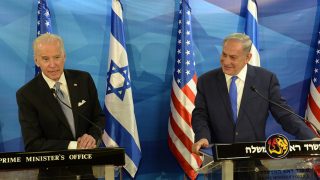
(Worthy News) – The Biden Administration is considering a ‘new doctrine’ to unilaterally recognize a demilitarized Palestinian State despite strong opposition to statehood within Israel.
On Wednesday, both Axios and the New York Times reported a seismic shift in U.S. foreign policy in its approach toward Palestinian statehood ahead of Secretary of State Blinken’s visit next week.
However, State Department Matthew Miller disagreed with the assessment, and stated, “There has been no policy shift in the administration. We have made quite clear publicly that we support the establishment of an independent Palestinian state. That has been the policy of the United States for some time. It has been the policy of this administration.”
According to The New York Times, the Biden Administration would recognize a “demilitarized Palestinian state in the West Bank and Gaza Strip that would come into being only once Palestinians had developed a set of defined, credible institutions and security capabilities to ensure that this state was viable and that it could never threaten Israel.”
The New York Times described the emerging “Biden Doctrine” as a strategy that encompasses strengthening the United States’ relations between Saudi Arabia and Israel, while maintaining a robust military stance toward Iran and its terrorist proxies across the Middle East.
According to a report by Axios, once the war has concluded with Hamas in Gaza, Secretary of State Blinken is examining options to unilaterally declare a Palestinian State to expedite normalization of relations between Saudi Arabia and Israel.
Saudi Crown Prince Mohammed bin Salman communicated his readiness to establish normal relations with Israel to US Secretary of State Antony Blinken a few weeks ago. This move would be part of efforts to reconstruct the Gaza Strip following the conflict. However, recognition by Saudi Arabia was contingent on Israel taking steps toward recognizing Palestinian sovereignty.
Upending years of U.S. policy, Axios reported that the Biden Administration believes the unilateral creation of a Palestinian State should be the first step in talk to resolve the Israeli-Palestinian conflict instead of the last one.
This change in U.S. policy upends the current Israeli Prime Minister’s policy which views that enhancing ties with the broader Arab region as crucial for addressing the Palestinian conflict. This approach was highlighted by the 2020 Abraham Accords, under which Israel, facilitated by the Trump administration, initiated diplomatic relations with the United Arab Emirates, Bahrain, Morocco, and Sudan.
Netanyahu’s coalition, composed of right-wing and religious parties, is staunchly opposed to the establishment of a Palestinian state, a sentiment that is also broadly shared among the Israeli public.
“If the administration can pull this together — a huge if — a Biden Doctrine could become the biggest strategic realignment in the region since the 1979 Camp David treaty,” the New York Times concluded.
Copyright 1999-2026 Worthy News. This article was originally published on Worthy News and was reproduced with permission.
Latest News from Worthy News

More than 1,300 people died as an extreme heatwave gripped Europe, shattering temperature records across several countries on Sunday, officials said.

Billionaire Democratic donor George Soros and his son Alex Soros have poured $102.8 million into the 2026 midterm election cycle, according to a New York Post review of federal campaign finance filings, placing the family among the most powerful financial forces shaping Democratic politics.

California Gov. Gavin Newsom is calling for a national tax on billionaires and a federal stake in artificial intelligence companies, positioning himself closer to the Democratic Party’s populist wing as he weighs a possible 2028 presidential bid.

The White House Religious Liberty Commission has issued a sweeping set of recommendations aimed at strengthening religious freedom in schools, workplaces, the military, health care and other public institutions, calling for clearer protections for Americans who face discrimination or pressure over expressions of faith.

Federal authorities have rescued 7,200 children from traffickers and predators under the Trump administration, marking a 42 percent increase from the previous administration, FBI Director Kash Patel said in a June 25 update.

Israeli Prime Minister Benjamin Netanyahu called a new U.S.-brokered framework agreement between Israel and Lebanon a “historic accomplishment,” saying the understandings could move the two countries toward ending hostilities and eventually reaching a peace agreement while dealing a major setback to Iran and its proxy Hezbollah.

A newly released report in the United Kingdom alleges that predominantly Muslim grooming gangs exploited vulnerable children across Britain for decades while police, social services, schools, health officials, licensing authorities, and political leaders repeatedly failed to intervene.