
by Karen Faulkner, Worthy News Correspondent
(Worthy News) – The annual BRICS Municipal Conference in Russia this October is expected to draw representatives from 126 nations with a view to possibly joining the bloc and leaving the US dollar for a new BRICS common currency.
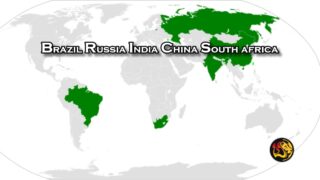
BRICS is an intergovernmental, geopolitical bloc that has coordinated multilateral policies since 2009. Originally comprising Brazil, Russia, India, China and South Africa, the BRICS bloc now includes Argentina, Iran, Saudi Arabia Iran, Egypt, Ethiopia, and the United Arab Emirates as well.
Ahead of October’s annual summit, the Brazil’s President last month called for BRICS nations to create a common currency for trade and investment among themselves in order to reduce their susceptibility to US dollar exchange rate fluctuations, Reuters reported in August.
However, Reuters noted in its report last month, the dollar continues to dominate world trade. “De-dollarising would need countless exporters and importers, as well as borrowers, lenders and currency traders across the world, to independently decide to use other currencies,” Reuters said.
Nevertheless, the growing number of developing countries that are interested in joining BRICS and ending their dependence on the US dollar for trade may ultimately amount to a challenge to the US dollar’s hegemonic status.
Copyright 1999-2026 Worthy News. This article was originally published on Worthy News and was reproduced with permission.
Latest News from Worthy News

President Donald Trump declared Tuesday that the United States has entered a new “Golden Age,” pointing to accelerating factory activity, record stock-market levels and sustained growth in American exports.

Written free-speech protections at American colleges have reached their strongest level in two decades, according to a new report from the Foundation for Individual Rights and Expression.

Intensifying Russian attacks on Ukrainian ports and commercial vessels have effectively revived a Black Sea blockade, threatening Ukraine’s agricultural economy and raising concerns over global food supplies.

Israeli and Lebanese representatives concluded the first day of U.S.-mediated negotiations in Rome on Tuesday, with talks scheduled to resume Wednesday morning as both sides seek progress toward a broader security agreement.

Israeli surgeons have successfully reconstructed the chest wall of a young cancer patient using a fully personalized, 3D-printed implant, marking a medical first for Israel and opening new possibilities for patients facing complex tumor-removal surgery.

Iran has deployed regular army special forces into northern Iraq, carrying out a series of ground raids against Iranian Kurdish opposition groups as Tehran moves to eliminate forces it views as a potential threat to the Islamic Republic.

Egyptian authorities have executed the man convicted of murdering a Coptic Orthodox priest, bringing to a close a case that shocked Egypt’s Christian community more than four years after the fatal attack, Worthy News learned Tuesday