
World News

Syria has begun destroying chemical weapons materials left behind by the Assad regime, marking the first known destruction process of its kind in the country in roughly a decade, officials told the U.N. Security Council on Thursday.

Tens of thousands of Spaniards poured into streets and public squares across the country Wednesday, protesting the government’s handling of the migrant crisis in Ceuta and demanding stronger protection of Spain’s borders.
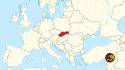
Slovakia’s government of Prime Minister Robert Fico has approved joining an international commission assessing compensation claims stemming from Russia’s invasion of Ukraine, despite Moscow reportedly warning that such a move would be considered a “hostile act.”

More than a dozen members of Serbia’s influential student movement and opposition figures were targeted with sophisticated spyware ahead of parliamentary elections, according to investigators, fueling concerns about government surveillance in what researchers call the country’s largest documented wave of such spying.

Estonia’s parliament has elected constitutional lawyer and human rights ombudsman Ülle Madise as the Baltic nation’s next president as the country sharply increases defense spending amid concerns about Russia’s full-scale invasion of Ukraine.

Hungary’s new government plans to impose an annual wealth tax on the country’s richest residents from next year as authorities widen investigations into billions of Hungarian forints in spending under former Prime Minister Viktor Orbán.
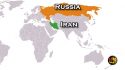
Russia secretly assisted Iran in developing advanced supersonic cruise missile technology that could threaten U.S. Navy aircraft carriers and other American military assets in the Middle East, according to a new Financial Times investigation.

Indonesia on Wednesday struggled with a major volcano eruption and massive wildfires impacting millions of people across the sprawling Southeast Asian archipelago.

Iran attacked American military positions across the Middle East on Wednesday after the United States carried out its largest strikes against the Islamic Republic since July, raising fears that their six-month conflict is returning to full-scale regional warfare.

Ukrainian President Volodymyr Zelenskyy has warned international airlines and insurers that Russian airspace is becoming increasingly dangerous as Ukraine expands long-range drone and missile attacks in response to Moscow’s invasion.

Germany has accused Russia of carrying out a “hybrid attack” involving an explosives-laden drone found near a Ukrainian cargo aircraft at Leipzig/Halle Airport, prompting Berlin to close a Russian consulate and cultural center.

Haitians were demanding answers after hundreds of mourners crowded into a church near the capital for the funeral of four of 47 people killed in one of the country’s deadliest recent gang attacks, which also devastated a Christian community and displaced thousands.
The United States launched a new wave of strikes against Iranian targets Tuesday as tensions escalated in and around the Strait of Hormuz, one of the world’s most critical oil-shipping corridors, according to The Wall Street Journal.

A man was killed and two police officers wounded early Tuesday in an extraordinary shooting involving heavily armed men in the eastern Netherlands that investigators reportedly suspect was a revenge attack tied to the criminal underworld.
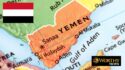
An emerging alliance between Yemen’s Iran-backed Houthi rebels and Somalia’s al-Shabaab terrorists is raising alarms among U.S. and regional officials, according to an exclusive report by The Wall Street Journal.